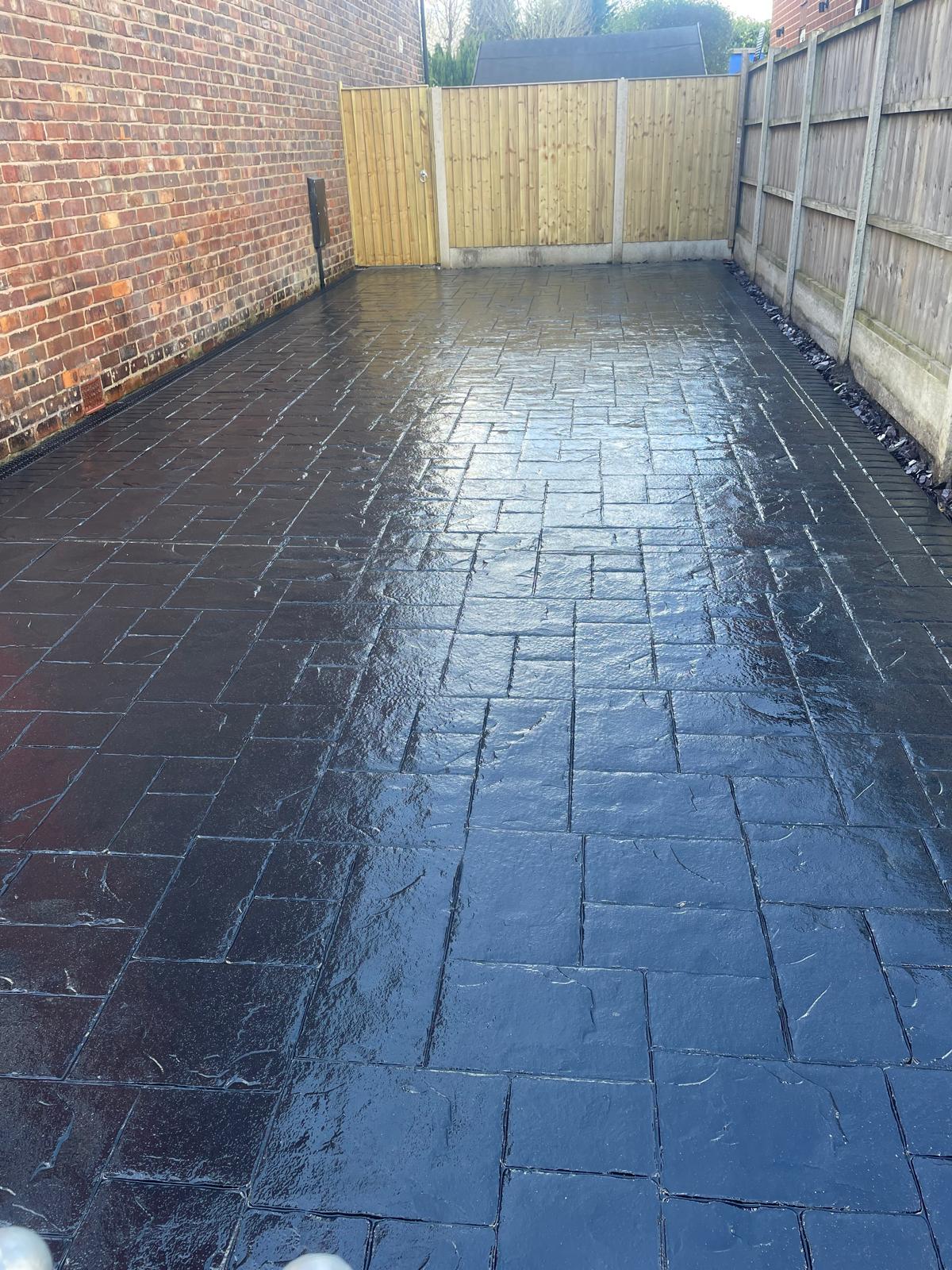
Every year, homeowners put off booking driveway work until "the weather improves." And every year, those same homeowners end up on a three-month waiting list come April, watching their neighbours enjoy new driveways while theirs still cracks underfoot.
Winter isn't the wrong season for driveway work. In many ways, it's the best one.
The winter advantage: 5 reasons to book now
1. Shorter waiting lists
Most good installers are booked 6-10 weeks out between March and September. In December and January, that lead time often drops to 2-4 weeks. If you want a specific team on a specific date, winter is when you can actually get it.
2. Better pricing and flexibility
Winter isn't peak season for driveway contractors, so there's more room for flexible start dates, longer deliberation on design, and (honestly) better deals on non-urgent jobs. It's also when most companies run promotional pricing to keep teams busy.
3. Ready for spring
A driveway installed in January is fully cured, sealed and ready for use by the time the weather turns. You get to enjoy the finished drive through the whole of spring and summer – rather than spending spring watching the installers.
4. Existing problems can't hide
Winter reveals every problem your current drive has. Frost lifts blocks. Standing water exposes bad drainage. Ice on cracked concrete shows exactly where the structural failures are. It's the perfect time to assess properly and design a replacement that fixes the real issues.
5. Gardens are dormant
If your driveway project involves adjacent landscaping, wall repairs or plant bed alteration, winter is easier – nothing's in flower, nothing's at its peak, and dormant plants tolerate being moved far better.
What about the weather?
Fair question. Modern imprinted concrete can be installed in temperatures down to around 3-5°C with the right additives and procedures. What actually stops work is:
- Sustained hard frost (less than -3°C for the 48 hours after pour)
- Heavy persistent rain during pour and initial cure
- Snow on the ground preventing excavation
In a typical North West winter, genuine working days are lost probably 20-30% of the time between mid-December and mid-February – meaning a 7-day job might stretch to 9-10 days. Annoying, but not the end of the world.
For all other surface types (block paving, porcelain, resin), the weather tolerance is even higher. Block paving can be laid in almost any weather that isn't actively flooding or freezing.
The perfect winter installation timeline
Here's how a typical winter project maps out:
- November-December: Book a site visit, finalise design and materials
- January-February: Installation starts – typically 7-10 working days
- Late February: Final seal and snag-list
- March onwards: Fully usable, enjoying it through spring
Compare that to a spring booking: you're on a 10-week waiting list, job starts in May, finishes in June, and you've lost the best months of the year to machinery.
Don't wait for spring
The best time to book a new driveway is the moment you're sure you want one. Winter or summer, that's always true.
If your driveway's on its last legs, or you're planning to sell in spring, or you've just had enough of weeds and sinking blocks – now's the right time to get the ball rolling. Book a free site visit and we'll give you an honest timeline and a fixed-price quote.